
By Doug Boucher
A motto that has guided Americans’ environmental action for several decades is the “Three Rs: Reduce, Reuse, Recycle.”
It tells us how to be better consumers:
don’t buy things we don’t need; if we buy something keep using it until it’s worn out; and when we’re through with it, put it in the recycling so that its material—glass, metal, paper, or plastic—can be converted into something else useful.
Here in Poolesville, people have started to add more Rs to the slogan. The idea is that when our possessions are worn out or broken, it’s better for the environment if we fix them rather than just chucking them in the blue bin. This approach was featured in the essay of the winner of the 2025 Poolesville Green scholarship, Zachary Antonishek. He proposed that Poolesville High School students could collect donations of broken things and repair them so that they could be resold, in a program he called “Revive” (Lots of Rs showing up here!). All kinds of objects could be repaired—clothes, lights, desks, curtains, and more—including many things made of materials that can’t currently be recycled.
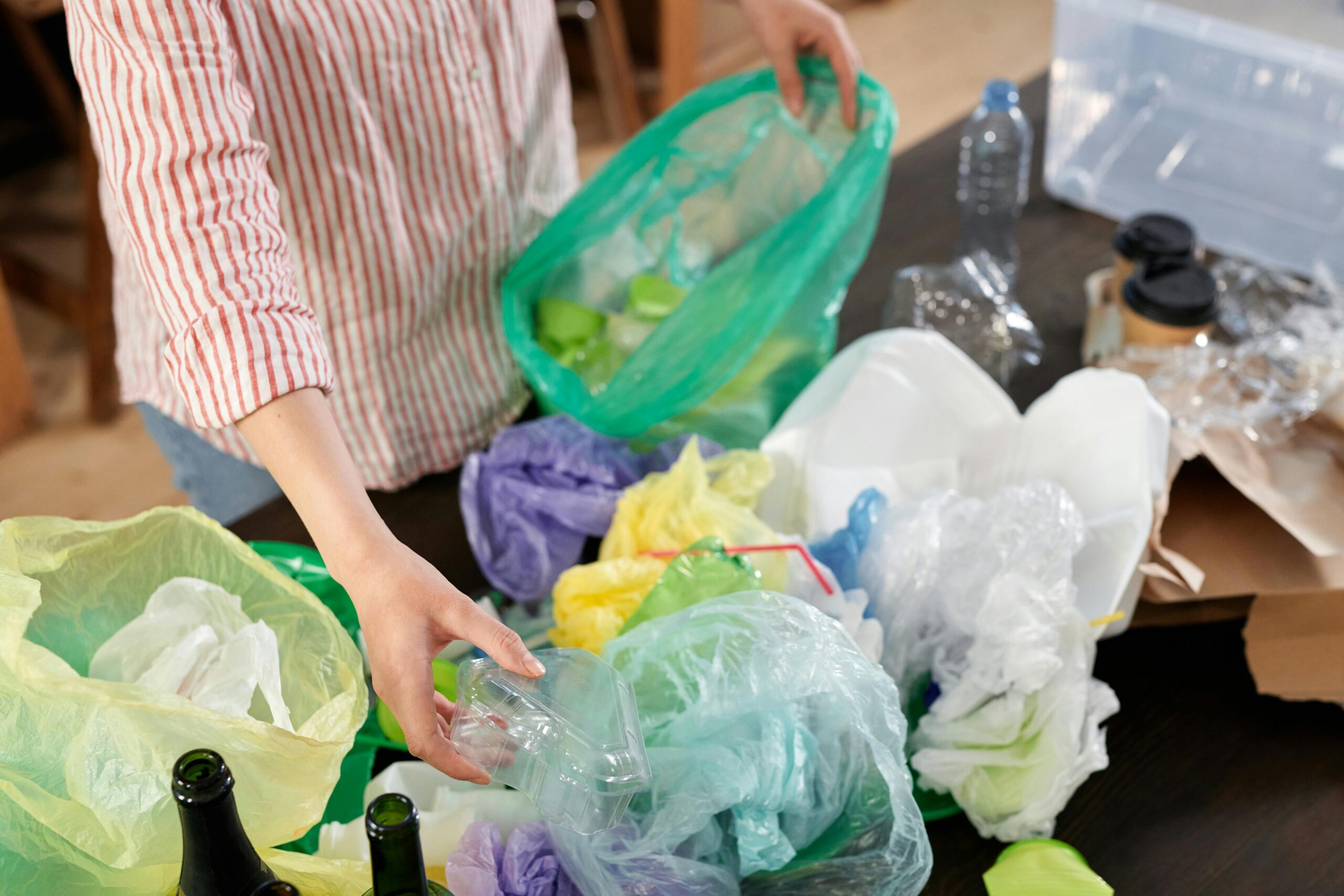
An example of this kind of innovative thinking that is already being done locally is the work of high schoolers from PHS and other schools in the club called “Crochet4Change.” These students (and a few helpful adults!) collect used plastic bags, cut them up, and tie the pieces into long strips. They then use large crochet hooks to make the plastic strips into sleeping mats which are given away to the homeless. While plastic bags could be recycled, the Crochet4Change approach takes advantage of their strength and flexibility and avoids the need to break their plastic down into a low-value mush before re-forming them into something useful.
Recently, I carried some plastic bags that had been donated by Poolesville’s Friendly Thrift Store to a Crochet4Change meeting, and it occurred to me that the Thrift Store is another great example of environmentalism in action. Yes, it does offer clothes, books, flowerpots, and car seats for sale at incredibly low prices, but besides exemplifying Thrift it’s also a key link in Reuse. In fact, lots of the town’s most fashionable young people now use it as a source of vintage clothing—Retro style in action.
The Town of Poolesville is well known for its environmental leadership, and through volunteer activities like these, it’s demonstrating the kinds of small steps that help to green the ways that our society processes its stuff. They show how to create an economy that is circular rather than disposable, in which we challenge the association of “new” with “good” and “old” with “useless” that we’ve come to take for granted. Right here in our little town, the environmental future is taking shape today.
Doug Boucher is President of Poolesville Green. He and his wife Charlotte have also volunteered with Crochet4Change and the Friendly Thrift Store
Published in Monocacy Monocle August 2025 Issue