
by Kerrie Kyde and John Snitzer
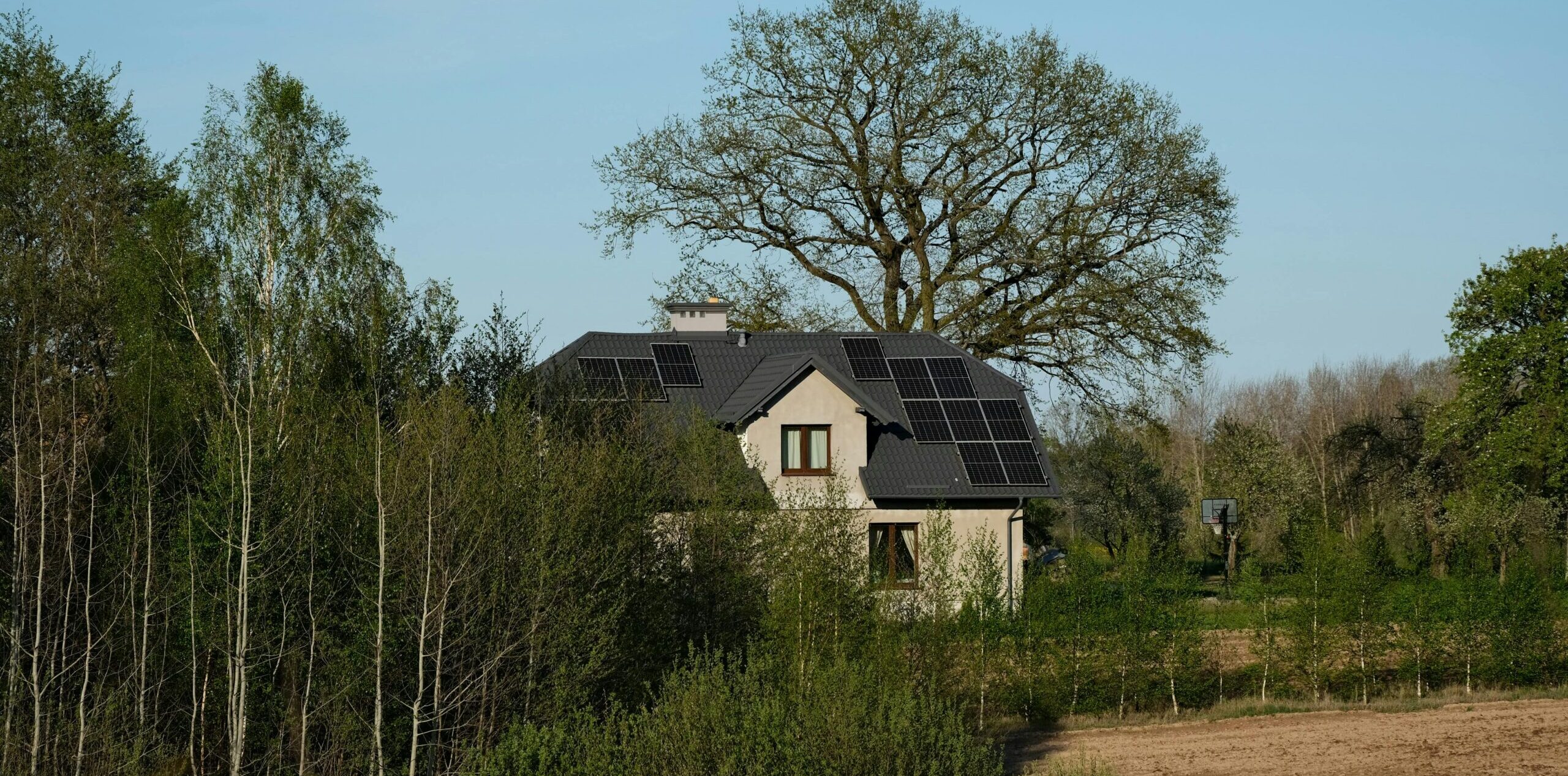
We strongly support the use of solar power, and took advantage of the 2020 Solar United Neighbors cooperative in Montgomery County to install about 8 kilowatts of grid-tied solar production on our Dickerson roof. We have since built a retirement house in Frederick County and installed another solar system, this one stand-alone and backed up by battery storage. Each system has advantages and disadvantages. Having lived with each, we’re appreciating both.
The Dickerson system is grid-tied, meaning that any power that we produce above and beyond our own needs is fed back to the regional electric grid through Potomac Edison lines. Conversely, when our system is making less power than we need (nights and gray days),we pull power from the utility. The switch is seamless. We get monthly reports from Enphase showing how much we produced, how much we used, how much we sent back to the grid and how much we were supplied with from the grid. (Enphase is the company that makes the inverter, the electronic device that converts direct current from the panels to alternating current, which is what your house uses.)
Our Dickerson household uses roughly 1000 kilowatt hours per month. It’s not an all-electric house; it’s heated with oil. People who have electric heat or a larger household will likely have higher usage rates. Our 8-kilowatt system meets about 70% of our needs. This means that for about six months of the year, our electric bill is $6.32 in “Universal Consumption Charges” and over the course of the year, our total electric expense is less than half of what it was before the solar installation.
An unlooked benefit of a grid-tied system is that, as a small electric power generator, we are paid for SRECs “Solar Renewable Energy Credits”. These are credits for renewable production that are bundled like financial instruments and sold on a Maryland state market to companies that need to offset their carbon-producing energy use to meet state standards. The price of SRECs fluctuates a bit, but for the last couple of years, we’ve earned about $600/year.
The Frederick County house solar system is really different. Since this system has to meet all our power needs it is much larger, 23 kilowatts of solar panels and a 40 kilowatt-hour battery bank. It is not grid-tied, and any power that the system produces that we can’t use goes into the batteries and is available when the panel array isn’t producing. So — no power lines, no meter, no electric bill, no power company. Comfortable satisfaction that we are living in an environmentally sound way. Freedom? Well, yes and no. For one thing, there are no SRECs payments. If you’re not producing power that’s going into the grid, you don’t get paid for making it! And we do a lot of what’s called “load shifting”, timing high-energy use activities like charging cars to coincide with high solar insolation and thus high power production. This requires paying close attention to what the array and the weather are doing. It’s not a “set it and forget it” system; we have to work with it.
During the high-sun months of May to September, the array makes more power than we can use, and often, more than can be stored in 40 kilowatt-hours of batteries. In a sense, this extra energy production is “wasted”, as it is not being used or stored. The inverter shuts down production when there’s nowhere for it to go. In the shoulder seasons of early spring and late fall the power stored in the batteries covers our household needs even when the sun isn’t shining.
The eight weeks surrounding the Winter Solstice though, are another story. Because of our latitude, during the winter there is only about 30% of the sun power available as there is in the summer to make electricity. The best solar production “window” is from 10 am to 2 pm,when the winter sun is highest in the sky. The array still produces power before and after these hours, and on cloudy days, in fact, but less. Enough less that if we have several gray days in a row, we can’t fill the batteries full enough to run the house HVAC system through the night.
Unfortunately, we have concluded that we need to supplement production during the shortest days of the year by installing a propane generator. The 7600-watt portable generator we expected to use occasionally to top up the batteries is getting a lot more use than we anticipated in this bitterly cold and gray winter. We wanted to be independent from fossil fuel use. We won’t be. We could have built a solar system with enough panels and storage capacity to meet our needs comfortably through the entire year, but the cost of such a system is staggering. Plus, for ten months of the year, it would be way more than we need.
We are learning as we go, and are making adjustments to schedules and activities to fit our power production. As retirees, we have the time and interest to do this. And being as energy independent as possible is important to us,propane tank notwithstanding. For busy working families with lots of kids’ activities, managing an off-grid system might be an overwhelming challenge. Ultimately, a grid-tied system is more efficient. Because the utility company is waiting in the wings the system can be smaller. Any extra generation capacity that would get throttled by an inverter in a non-grid-tied system is instead produced and dumped into the grid. Both systems allow you the satisfaction of significantly reducing your greenhouse gas footprint, and using sun power instead.
Poolesville Green column for the March 2026 Monocacy Monocle